Why Ice Melt Is Quietly Damaging Your Driveway (Even Though Flagstaff Plows With Cinders)
A lot of homeowners assume that if their driveway is scaling and flaking, it must be from the same road salt the city uses on the streets. In Flagstaff, that assumption is actually wrong — and understanding why points straight at what's really causing the damage.
Flagstaff doesn't plow with salt anymore
The City of Flagstaff switched away from chemical de-icer on city streets back in 2013, moving to volcanic cinders instead, after determining that the chemical product was harming roadside ponderosa pine trees. Since then, Flagstaff has plowed and treated municipal streets primarily with cinders — an abrasive traction material, not a chemical de-icer — with limited use in residential areas. ADOT still applies chemical de-icer on the state highways running through town, including Route 66, Milton Road, and Fort Valley Road, so there is some salt exposure along those specific corridors. But for most residential streets and driveways, city-applied road salt isn't the culprit it would be in a lot of other snowy states.
So what's actually scaling your driveway?
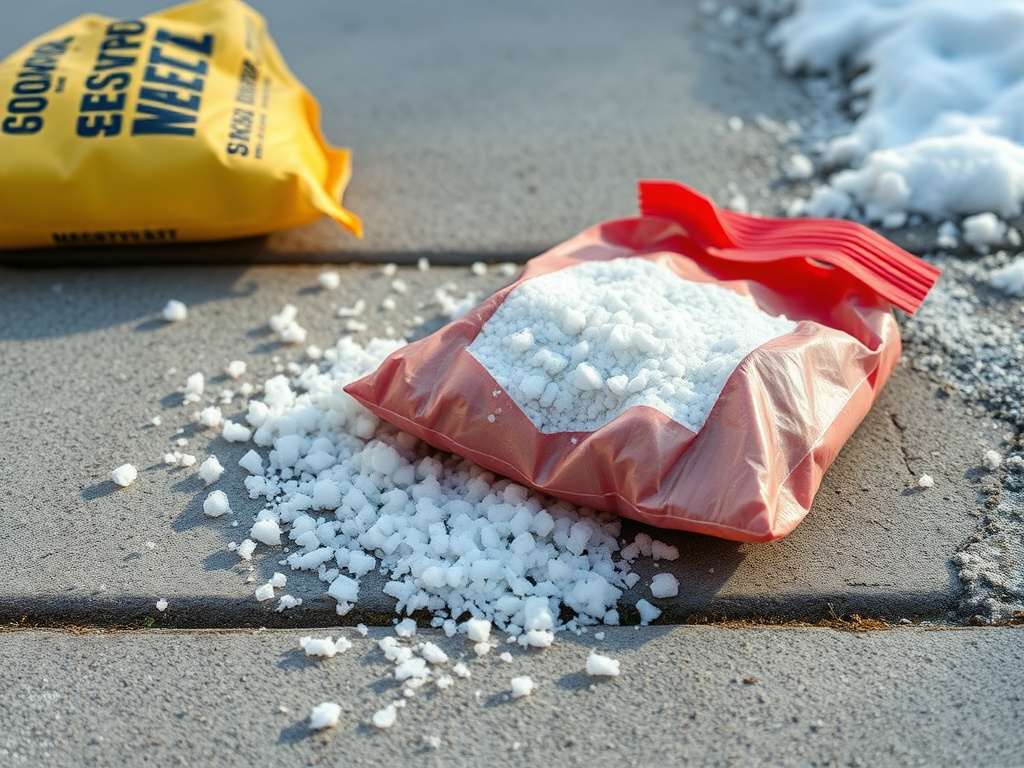
In most cases, it's the ice-melt product homeowners apply to their own driveways, walkways, and front steps. Bagged de-icing salt works by lowering the freezing point of water on the surface — which is exactly why it can be hard on concrete. Repeated application keeps the surface wetter for longer through each freeze cycle instead of letting it dry out between storms, and that extended saturation is precisely the condition that accelerates concrete scaling. Water sitting in the concrete's surface pores freezes, expands by roughly 9% in volume, and fractures a thin layer of the surface. Do that every time you salt the driveway through a Flagstaff winter with around 206 average freeze days, and the cumulative effect adds up.
Scaling vs. deeper damage
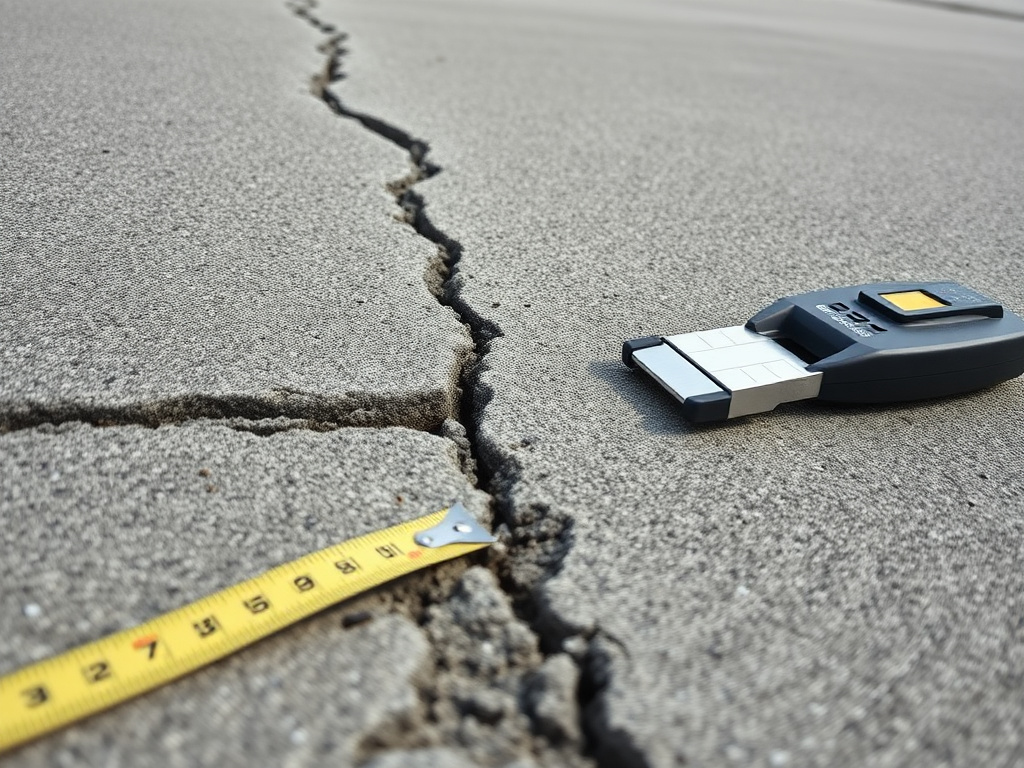
It's worth being clear about what ice-melt-driven scaling actually looks like versus more serious damage. Scaling is a thin, surface-level flaking — the top layer of the concrete paste wearing away, often leaving a rougher, more porous-looking surface than the rest of the slab. It's cosmetic and gradual at first, but left unaddressed over multiple winters, it can progress into deeper surface loss and eventually contribute to cracking as the weakened surface layer offers less protection to what's underneath. It's a different failure mode than a structural crack or a sunken slab, and it's usually one of the more preventable ones, since it's driven by a product you're choosing to apply.
What actually reduces ice-melt-driven scaling
You don't necessarily have to give up on ice-melt products entirely — but a few adjustments make a real difference. Sweeping up excess granules once they've done their job, rather than letting them sit and keep dissolving into the surface, limits how long the concrete stays saturated. Choosing calcium magnesium acetate or similar concrete-safer de-icing products over straight rock salt (sodium chloride) reduces the chemical aggressiveness, though even these still contribute to surface saturation if overused. And for driveways that are already showing early scaling, having the surface professionally sealed can add a real layer of protection against future ice-melt exposure — sealing a sound surface is a much smaller job than resurfacing one that's already scaled.
What about the cinders themselves?
It's fair to ask whether the volcanic cinders Flagstaff uses on city streets cause their own kind of wear. They do, but it's a different mechanism than chemical scaling — cinders are an abrasive traction material, not a chemical de-icer, so any effect they have on concrete is closer to mechanical wear from grit being driven or plowed across a surface repeatedly, similar to how sand or gravel tracked onto a slab can gradually dull and roughen a finish over years. It's a slower, more mechanical process than the chemical-saturation cycle driving ice-melt scaling, and it's mostly relevant on public roads and areas where cinders accumulate and get driven over repeatedly, rather than a typical residential driveway that's swept or cleared regularly.
If your driveway is already scaling
Early-stage scaling is usually a cosmetic, surface-level issue that's straightforward to resurface. Left alone over more winters, it can progress into deeper surface loss and start contributing to cracking. If you're noticing a rougher texture, visible flaking, or small pits developing on a driveway or walkway you've been treating with ice-melt, it's worth having it assessed before another winter of salt application adds to the damage. A free on-site inspection can tell you whether you're looking at early, easily resurfaced scaling or something that's progressed further, and give you a clear, honest read on what it'll take to fix — along with a few practical adjustments to your winter routine that can slow future scaling regardless of which repair path you choose.
Frequently asked questions
Not anymore, for the most part. The City of Flagstaff switched from chemical de-icer to volcanic cinders on city streets in 2013 to protect roadside ponderosa pine trees. ADOT still uses chemical de-icer on state highways through town, like Route 66, Milton Road, and Fort Valley Road, but most residential streets are treated with cinders, not salt.
Occasional, moderate use generally isn't a major problem, but repeated heavy application over many winters is a well-documented contributor to concrete surface scaling, since it keeps the surface wetter through freeze cycles. Sweeping up excess granules, choosing a gentler de-icing product, and having the surface sealed can all reduce the long-term impact.
Ready for a free estimate?
Tell us about your damaged concrete and we'll build a clear, no-pressure estimate.