Sidewalk & Walkway Leveling
An uneven sidewalk joint is a real fall risk in a climate where the same surface has to handle snow, ice, and repeated freeze cycling on top of everyday foot traffic.
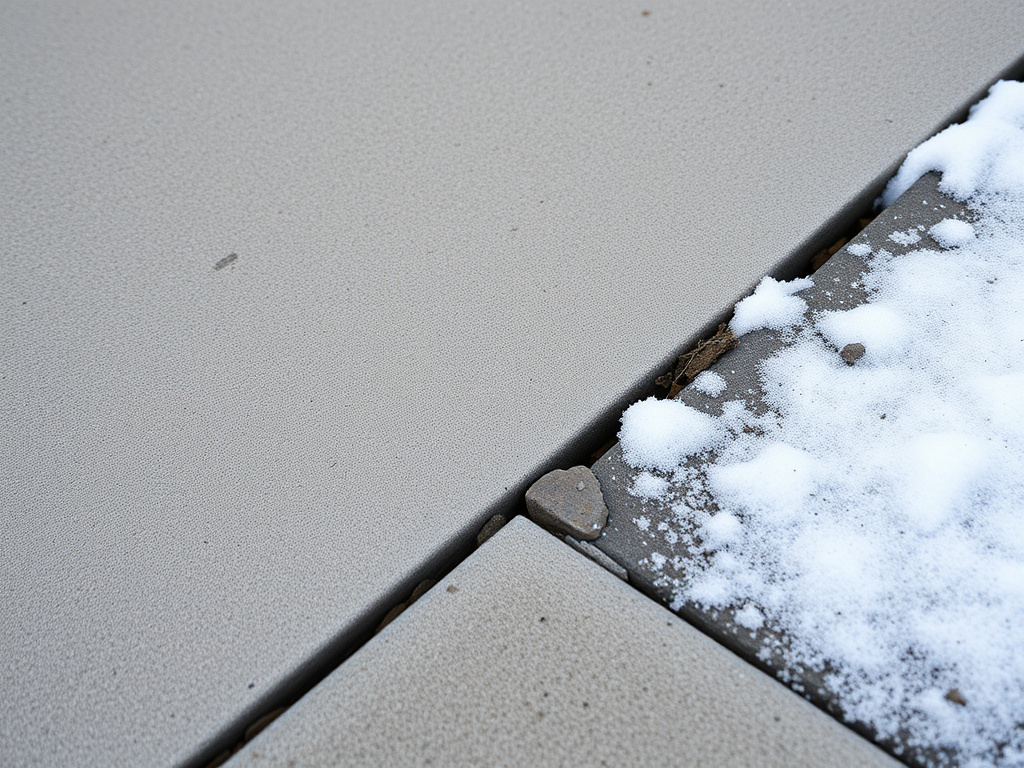
Sidewalk and walkway slabs settle unevenly at the joints between sections for a mix of reasons — soil compaction differences between adjacent slabs, root intrusion, erosion, and in Flagstaff's case, the added complication of a cinder-over-clay soil profile that can shift more than a simple gravel base would. Even a half-inch offset at a joint becomes a real trip hazard, and Flagstaff's winter conditions make it worse: an uneven joint collects snow and ice differently than the surrounding slab, creating exactly the kind of hidden hazard that catches people off guard.
This is a leveling and repair service for existing walkways — correcting settled, tilted, or offset sections so the surface transitions smoothly again — not new sidewalk installation. Polyurethane foam or traditional mudjacking lifts the low section back to match its neighbor, closing the offset without replacing the concrete. It's a faster, less disruptive fix than demolition and repour, and it's typically the right call whenever the existing slab is still structurally sound.
For HOA common areas, community walkways, and properties open to the public, uneven walkway sections carry real liability exposure as a trip-and-fall hazard — separate from concrete's own structural performance, this is a legitimate safety and legal-exposure issue property managers and HOA boards should address proactively rather than waiting for an incident.
Why property owners choose it
- Corrects trip-hazard offsets at joints without a full walkway replacement.
- Addresses a genuine safety issue before it results in a fall, especially relevant with winter ice and snow on top of an uneven surface.
- Faster, less disruptive, and less costly than demolition and repour for walkways that are still structurally sound.
- A common, proactive fix for HOA common areas and community walkway programs managing trip-hazard exposure across multiple properties.
- Matched to Flagstaff's freeze-thaw settlement patterns, not a generic leveling approach.
Why walkway joints settle unevenly
Sidewalks are poured in sections separated by control joints, and each section can settle at a slightly different rate depending on the soil directly beneath it, nearby tree roots, drainage patterns, and how the base was compacted at the time of the original pour. In Flagstaff, the added factor is a soil profile that commonly layers volcanic cinder over expansive clay — a combination that doesn't always settle as predictably or evenly as a simple sand or gravel base. Add repeated freeze-thaw cycling on top of that, and it's common for one section of a walkway to end up a half-inch or more different in height from its neighbor within a few years.
Leveling vs. replacement for walkway sections
If the concrete itself is structurally sound — no major cracking through the slab, no crumbling edges — lifting the low section back to grade with polyurethane foam or mudjacking is almost always the faster, less expensive fix. Replacement becomes the better option when a section has deteriorated too far to lift successfully, or when the offset is caused by an ongoing issue like active root intrusion that needs to be addressed first.
Ideal for
- Sidewalk sections with a visible offset or lip at the joint between slabs
- HOA and community walkway programs managing trip-hazard exposure across multiple units
- Front-entry walkways where an uneven surface is a daily hazard for residents and visitors
- Properties open to the public where walkway safety is a real legal-exposure concern
What affects the cost
Sidewalk Leveling questions, answered
Many municipal and ADA-adjacent guidelines commonly reference roughly a quarter-inch as the threshold worth addressing, with anything closer to a half-inch or more considered a clear, obvious hazard. If you can catch a toe or a shoe edge on the offset walking normally, it's worth having leveled regardless of the exact measurement.
In most cases where the slab itself hasn't cracked through or crumbled at the edges, yes — polyurethane foam or mudjacking lifts the low section back to match its neighbor without demolition. We assess the slab's condition first and will recommend replacement instead if lifting won't hold.
Yes — sidewalk and walkway leveling is a common proactive project for HOA and community properties managing trip-hazard liability across shared walkways. We can assess multiple sections in one visit and prioritize the ones that pose the most immediate risk.
Sidewalk Leveling done right, by a crew that works this specific climate
Sidewalk Leveling isn't a commodity — the result depends on correctly diagnosing whether you're looking at freeze-thaw damage, soil-movement settlement, or both, and matching the repair to Flagstaff's real winter exposure instead of a warm-climate approach. We assess what your concrete actually needs, address the root cause where we can, and repair to hold through real Northern Arizona winters.
We serve Flagstaff, Doney Park, Fort Valley, Bellemont, Parks, Munds Park, Kachina Village, Williams, Sedona, Prescott, and Prescott Valley. Every job starts with a free, no-pressure on-site estimate.
We also stay in our lane: we repair and restore existing concrete — we don't pour new driveways or handle new-construction flatwork. That focus is deliberate. Diagnosing and fixing damaged concrete correctly is a different skill set than pouring new slabs, and it's the one we've built this company around.
Free inspection
We assess the actual damage and give you a clear, itemized estimate.
Correct diagnosis
We identify whether sidewalk leveling needs a targeted repair or a more involved fix — no upsell.
A repair that holds
Work matched to real Flagstaff winters, not a warm-climate patch job.
Related repair services
Ready for a free sidewalk leveling estimate?
Tell us what's cracked, sunken, spalled, or heaved and we'll put together a clear, no-pressure repair estimate — built for real Flagstaff-area freeze-thaw damage.